ES Xeon Discussion

Notice: Page may contain affiliate links for which we may earn a small commission through services like Amazon Affiliates or Skimlinks.
However, since I plan to use it for MS73-HB, I will purchase two, so there is a price issue and I think I will purchase Q079.
If you have some methods to purchase from Taobao, it may be better. The price for Q071 there is 400 RMB, and I have bought one.
Q071.png
 
you need microcode for cpuid 806F8 platform 10
Just curious since i am also interested in 9480 Max (the prices are getting more interesting).
I guessed they are only compatible with the Mainboards that officially support them Gigabyte and Supermicro C741.
Also because they have this weird/different cpu shape, or is there any chance that they would work on other mainboards that do not list them? I am also asking because you speak about the microcodes.
they fit in a LGA4677 socket with E1C Carrier which supports the wings of the Xeon Max.
you need C741 at least and BIOS Support, not only microcode. there is a support module(a kind of uncore microcode) for every stepping and
physical chop(XCC,MCC)
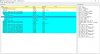
Xeon MAX MCU.jpgXeon MAX Uncore.jpg
if your BIOS don't support Xeon Max natively, i doubt you can add it manualy.(but i can be wrong - that happend lately)
 
  • Like
Reactions: DHamov
please note regardless of BIOS, Xeon Max don't work on chipset W790.
also SPR-SP E3 gives no life, they are helt in reset by CS/ME.
 
  • Like
Reactions: DHamov
Are there any known E0/E1 SPR-SP chips with accelerators (other that weird Q03J which seems to use D0 microcode)?

retail skus of these only come with DSA:
Q0KG = 8470
Q0KL = 8470Q
Q0KS = 8452Y

these don't have much info online, I wasn't even able to find a seller showing these on ebay/taobao, but maybe one of these is related to 8468H?
Q0KH = 8468/8468H?
Q0KJ = 8468V? 8469C?
 
Are there any known E0/E1 SPR-SP chips with accelerators (other that weird Q03J which seems to use D0 microcode)?
806F4 is E0, D0 (806F3) will not work.
most of the errata(bugs) are not in the core section. do not expect accelerators to work properly in stepping E0.
they can, but for what reason intel builded E2,E3,E4,E5 ???
 
806F4 is E0, D0 (806F3) will not work.
most of the errata(bugs) are not in the core section. do not expect accelerators to work properly in stepping E0.
they can, but for what reason intel builded E2,E3,E4,E5 ???
In chart from YuuKi_AnS (https://pbs.twimg.com/media/FXIgH-iVUAE2S2p?format=jpg&name=4096x4096) it seems like E2/E3 might have been built due to UPI link bugs (there are of course probably more issues fixed in each stepping)?

regardless I'm not expecting the accelerators to work perfectly, just want to see which QDFs to watch out for to try out (even if somewhat or completely broken) accelerators that also work on C741 motherboards without D0 microcode (like supermicro/asrock/tyan/etc.)

I found Q0KM mentioned, which might be 8480+ equivalent, which has one of each accelerator, but I haven't been able to find much information.
 
Last edited:
In chart from YuuKi_AnS (https://pbs.twimg.com/media/FXIgH-iVUAE2S2p?format=jpg&name=4096x4096) it seems like E2/E3 might have been built due to UPI link bugs (there are of course probably more issues fixed in each stepping)?
prepared and translated to english.
Zwischenablage_07-10-2024_01.jpg
I found Q0KM mentioned, which might be 8480+ equivalent, which has one of each accelerator, but I haven't been able to find much information.
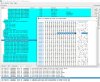
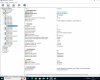
ask the seller for HWinfo Report file (bus screenshot)
if they refuse you have to buy and check, that's what i doing usualy.
someone must start....
 
  • Like
Reactions: Sparky'sAdventure
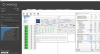
intel_sample_bench.jpg

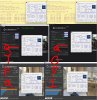
I installed QYFQ and Q071 on a dual socket board and compared them. The memory configuration is 1DPC 8 channels.

The program used Cinebench 2024 / R23 and 7-zip.

Although Q071 has a lower score, I like it better than QYFQ in terms of immediate response from higher clock speeds and less idle power. (QYFQ starts at 150W. Q071 starts at 100W.)
 
Last edited:
Although CineBench is commonly used, and i also use it to see if the system is running ok for a new build. It seems not the type of benchmark where dual cpu configs shine compared to single cpu results. See also the results of Arabus above. Also On a single Q03J on Asus w790 Sage i got scores are not that far off your dual cpu results. CB 2024 Multi core 3396, single core 81. I also think it has to do with Power Limit settings. CB is typically run a few times within the time power can be higher than TDP. But it seems that dual cpu systems do not really allow for much more power on 2 cpu's. Maybe it depends on the board, but i never saw more than 350W per cpu on dual config, while i see 370W for single. (Maybe it depends on the board).

But one important advantage for dual cpu config with full memory population (2x8 channels) is that memory bandwidth just doubles. For Neural Networks, and RL training on CPU i really get approximately 1.9-2 times better performance with dual cpu than with single cpu. On Also llama.cpp and ollama on cpu i get 2 times more tokens/s as with single cpu. As always the scalling and performance really depends on the application, dual cpu is not always worth it, but it can be. At least for multi-threaded memory bandwidth it seems steppings later than E0 did not get much faster, then the ES versions.
 
Last edited:
This thread is so long, it is hard to follow - is there any summary anywhere of the current state of QS dual socket (UPI) Xeons? My 2696v3 are incredibly long in the teeth at this point, so I am thinking of upgrading...
 
  • Like
Reactions: Cythisia
This thread is so long, it is hard to follow - is there any summary anywhere of the current state of QS dual socket (UPI) Xeons? My 2696v3 are incredibly long in the teeth at this point, so I am thinking of upgrading...


So basically... for guaranteed use on an MS73 HB1/2/0 with B0 stepping (Buy it on Newegg, cheapest available at $1100 since scalping with people buying these like candy.)

QYFS = 8480+ D0
QYFX = 8490H D0
QYFW = Unknown, I can't find this sample anywhere.
QYFQ = 8468 D0
QYFP = 8468 D0

This is for Platinums. You can get these Platinums cheaper than Silver/Golds that don't usually have a large amount of ES/QS rolling around anyhow. Grab a pair of 8468s for $150-200 (each) and eat.

ASUS W790 SAGE/ACE ($700) also supports D0 stepping natively (This can be changed with modding bios FITs for QS/Prod too), so the same CPUs above. Not worth getting any other single socket board other than a ASUS W790 board for feature set at this point.

--------
If you wana stick on 2011-3, grab some 2696 V4s and HUANANZHI boards, (recommend F8D only unless you can find a unicorn) otherwise go to 1st gen Scalable Platinums 8000 (LGA 3647), can grab x2 P-8136s for cheap and run them on an ASUS C621 WS SAGE with modded FIT tables. Much better energy savings.

Skip 2nd gen 8100 (LGA 3647) unless you can find 8180s for the price of 8136s.
Skip 3rd gen 8300 (LGA 4189) all together. Really, skip it.

EDIT: Not sure why I kept saying B0. Is D0, ty RolloZ170 for pointing that out.
 
Last edited:
Thanks, that was an awesome reply, very helpful! So B0 stepping is QS for 84xx? I did just pick up some 2696v4 recently, and they should work fine on my existing board, but those are going to be a marginal improvement, and I am looking to ~double or more.