
I can only tell you that my WC621D8A-2T runs fine with a Xeon Platinum 8175M. But that's just a OEM CPU with normal stepping, so not an answer to your question...I found a WC621D8A-2T for a very cheap price, but I cannot find anywhere if this board can run ES CPUs. The EPC621D8A seems ok with some of them, but I don't know if the bios is the same between the board
ES Xeon Discussion
- Thread starter britinpdx
- Start date
Notice: Page may contain affiliate links for which we may earn a small commission through services like Amazon Affiliates or Skimlinks.
we need some clearance about WC621D8A-2T vs EPC621D8A
EPC621D8A was born 11/15/2017 - the first BIOS 1.20 includes microcodes for SkyLake A1,A2,B0,H0
WC621D8A-2T was born 12/11/2019 - the first BIOS 1.10 includes microcodes for SkyLake H0 - CascadeLake A0,B0,B1
(we see, NO microcodes for any SKL ES)
50650 = SKL A1 (QKGG...)
50651 = SKL A2 (QJVV,QJWW...)
50652 = SKL B0 (QL1M,QL1L...)
50653 = SKL B1 (P-8124,P-8136)
50654 = SKL H0 (6130,8124M,8175M...)
50655 = CLX A0 (QQ8A,QQ8M,QPKD...)
50656 = CLX B0 (QRAG,QRAN...)
50657 = CLX B1 (8222CL,8259CL,QTFC,...)
EPC621D8A was born 11/15/2017 - the first BIOS 1.20 includes microcodes for SkyLake A1,A2,B0,H0
WC621D8A-2T was born 12/11/2019 - the first BIOS 1.10 includes microcodes for SkyLake H0 - CascadeLake A0,B0,B1
(we see, NO microcodes for any SKL ES)
50650 = SKL A1 (QKGG...)
50651 = SKL A2 (QJVV,QJWW...)
50652 = SKL B0 (QL1M,QL1L...)
50653 = SKL B1 (P-8124,P-8136)
50654 = SKL H0 (6130,8124M,8175M...)
50655 = CLX A0 (QQ8A,QQ8M,QPKD...)
50656 = CLX B0 (QRAG,QRAN...)
50657 = CLX B1 (8222CL,8259CL,QTFC,...)
Last edited:

I could really use some help navigating Intel ES / QS stuff. I have some AMD ones from rome generation (ZS17, '-04's). Some of my questions might come from context of my AMD experience and none with Intel ES/QS.
I'm interested in 8375C I'm seeing on ebay, I'm seeing a lot of models all under this one umbrella of a name which I realize is probably just an approximation.
ES:
QVLS: Intel platinum 8375c/8362 ES qvls 32c 2.7ghz 3.6/3.6ghz 54mb 300w lga4189 CPU | eBay
QVLP: Intel Xeon Platinum 8375C ES QVLP 32C 2.8GHz 3.5/3.5GHz 54MB 300W LGA4189 | eBay
QS:
QWLQ Intel xeon Platinum 8375C QS CPU 32 core 2.9G server processor QWLQ CPU LGA4189 | eBay
QXDA: Intel Xeon Platinum 8375C QS QXDA 32C 2.9GHz 3.5GHz 54MB 300W LGA4189 | eBay Intel Xeon Platinum 8375C QS 32-Core 2.80-3.50GHz 330W LGA-4189 CPU Processor | eBay
Non-ES-QS
SRKHA: Intel Xeon Platinum 8375C 32-Core 2.90GHz 300W LGA-4189 CPU Processor Non-QS/ES | eBay
SRKUS...
First regarding speeds. the Rome CPUs need overclocking or run at rather low speeds, particularly the ES (ZS17 / ZS14). How does speed vary from ES to QS to final in Intel land? They all list 3.5/3.6 GHz turbo, but I know Intel has rather complex frequency tables for active cores vs instruction set. I don't expect exact answers, maybe just anecdote or extrapolation from skylake?
Other aspects of the CPU can lag behind sometimes. Like on the ZS rome CPUs the infinity fabric is slow. Would I expect issues with memory controller, cache, etc. on these Intels?
How do these show up to the system / OS? Like the first QXDA link is showing 8375C in windows, in cinebench, in hwinfo, but upon closer inspection it looks like SRKHA screenshots, so I don't trust the screenshots. The second link shows QXDA in hwinfo and Intel CPU 0000%, which seems more reliable. Of course it also shows the current frequency as 4.3 GHz so...still probably doctored?
If I went with QS, would I expect near "final" speeds and compatibility, but just have a strange name? I'd be able to update bios though and have more board selection?
I know the ES will be stuck on some old bios on specific boards only, but should it get near final performance?
Any words of warning I should know?
And lastly, has anyone touched ice lake ES/QS?
Any insight at all is appreciated.
Thanks
I'm interested in 8375C I'm seeing on ebay, I'm seeing a lot of models all under this one umbrella of a name which I realize is probably just an approximation.
ES:
QVLS: Intel platinum 8375c/8362 ES qvls 32c 2.7ghz 3.6/3.6ghz 54mb 300w lga4189 CPU | eBay
QVLP: Intel Xeon Platinum 8375C ES QVLP 32C 2.8GHz 3.5/3.5GHz 54MB 300W LGA4189 | eBay
QS:
QWLQ Intel xeon Platinum 8375C QS CPU 32 core 2.9G server processor QWLQ CPU LGA4189 | eBay
QXDA: Intel Xeon Platinum 8375C QS QXDA 32C 2.9GHz 3.5GHz 54MB 300W LGA4189 | eBay Intel Xeon Platinum 8375C QS 32-Core 2.80-3.50GHz 330W LGA-4189 CPU Processor | eBay
Non-ES-QS
SRKHA: Intel Xeon Platinum 8375C 32-Core 2.90GHz 300W LGA-4189 CPU Processor Non-QS/ES | eBay
SRKUS...
First regarding speeds. the Rome CPUs need overclocking or run at rather low speeds, particularly the ES (ZS17 / ZS14). How does speed vary from ES to QS to final in Intel land? They all list 3.5/3.6 GHz turbo, but I know Intel has rather complex frequency tables for active cores vs instruction set. I don't expect exact answers, maybe just anecdote or extrapolation from skylake?
Other aspects of the CPU can lag behind sometimes. Like on the ZS rome CPUs the infinity fabric is slow. Would I expect issues with memory controller, cache, etc. on these Intels?
How do these show up to the system / OS? Like the first QXDA link is showing 8375C in windows, in cinebench, in hwinfo, but upon closer inspection it looks like SRKHA screenshots, so I don't trust the screenshots. The second link shows QXDA in hwinfo and Intel CPU 0000%, which seems more reliable. Of course it also shows the current frequency as 4.3 GHz so...still probably doctored?
If I went with QS, would I expect near "final" speeds and compatibility, but just have a strange name? I'd be able to update bios though and have more board selection?
I know the ES will be stuck on some old bios on specific boards only, but should it get near final performance?
Any words of warning I should know?
And lastly, has anyone touched ice lake ES/QS?
Any insight at all is appreciated.
Thanks
TDP = 300/330W - supermicro runs them but that can be changed in next BIOSs.I'm interested in 8375C I'm seeing on ebay,
avoid ES1Any words of warning I should know?
606A4 - Ice Lake-SP L0
606A5 - Ice Lake-SP C0
606A6 - Ice Lake-SP M0/M1 D0/D1/D2
most sellers mean ES2 = QS.
HWinfo searched in a database for mathing parameter, if one or more is found it will be displayed. Note the Brand Name is not compared.
So it can be happen QS is displayed but Brand Name is still "Genuine Intel(R) CPU 0000%@" (Brand Name is what CPU-z shows i.e.)
my first Ice Lake was a QU9B Gold 5315y ES1 - runs on Gigabyte/ASRock boards out of the Box.If I went with QS, would I expect near "final" speeds and compatibility, but just have a strange name? I'd be able to update bios though and have more board selection?
on Supermicro X12SPL need BIOS 1.0 (Note: downgrade is rejected,replace BIOS chip)
next is QWAQ 6330 ES2 D0, mentioned as QS by the seller, but only 1.80Ghz base. works on X12SPL latest BIOS.
you should go with QWLQ'm interested in 8375C I'm seeing on ebay, I'm seeing a lot of models all under this one umbrella of a name which I realize is probably just an approximation.
i have seen aQWLQ as production unit. anything can happen because this 837xC are Confidential OEM SKUs.
QVLS,QVLP(330W) are 606A5 - Ice Lake-SP C0.
looks like the 8375C clocks all cores 3500/3600Mhz (non AVX) results in 300/330Watts.They all list 3.5/3.6 GHz turbo
only some Custom OEM go all core 3500/3600Mhz but not the Intel standard SKUs(ie.8380 turbo 3400,all core 3000)
Incredibly helpful @RolloZ170
If I cared about non-avx I'd be buying more AMD, but I have some need of an AVX-512 monster. Any insight on how avx clocks may vary between qwlq and final?
What board should I get for it you think?
X12DAI, X12DPI or, or MD72-HB_ would be my go to. You said support can disappear in a future BIOS, but mostly due to TDP reasons?
If I cared about non-avx I'd be buying more AMD, but I have some need of an AVX-512 monster. Any insight on how avx clocks may vary between qwlq and final?
What board should I get for it you think?
X12DAI, X12DPI or, or MD72-HB_ would be my go to. You said support can disappear in a future BIOS, but mostly due to TDP reasons?
i had a ASRock Rack SPC621D8-(2L/2T), they support officialy 300W TDP.What board should I get for it you think?
X12DAI, X12DPI or, or MD72-HB_ would be my go to. You said support can disappear in a future BIOS, but mostly due to TDP reasons?
Supermicro is working today, but officialy 270W TDP can be dropped in next BIOS builds like it happened on X11SPM.
Note the X12DPi lacks heatsink for CPU0, better choose the X12DAi Workstation one.
Gigabyte MU72/MD72 is OK too but specified to 270W TDP like supermicro's.
we can only guess. But the 8375C is apart from rules, its a custom OEM SKU.Any insight on how avx clocks may vary between qwlq and final?
the QL2K has a Thermal Design Current(TDC) of 255A, same as the OEM 240W TDP ones that does'nt work on most supermicro boards.I picked up a QL2K Xeon W-3175X ES. Any suggestions on a motherboard to pair it with that wouldn't require a modified bios?
furthermore its a SKL B0 stepping, requires a modded BIOS on most boards that support 240W TDP processors i.e. ASRock Rack EPC621xxx.
But i was able to modify my X11SPM to run a QL2K (not BIOS mod, VRM mod required)
I recomment to buy a ASRock Rack EPC621D8A,EPC621D6U-2T,WC621D8A-2T and ask for a modded BIOS.
There doesn't seem to be much info out there on the QL2K.
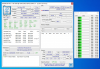
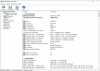
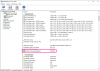
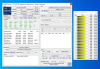
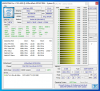
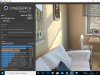
QL2K Overclocked to 3200Mhz all cores air cooled
Thanks for the info, i actually have a Asrock Rack EPC621D4I-2M and two modified bios files from the seller but I don't really trust the files, it was hard to get them and i have no idea why he sent me two. I was hoping there was something with a little more support-ability out of the box that wouldn't require me to get a modified bios.
Thoughts on the EVGA SR-3 Dark working?
Thoughts on the EVGA SR-3 Dark working?
for that board i have nothing.i actually have a Asrock Rack EPC621D4I-2M and two modified bios files from the seller
only the first revision, actualy you can not flash modded BIOS in it.Thoughts on the EVGA SR-3 Dark working?
the ASRock WC621D8A-2T has 12 phase VRM with OC BIOS or ASUS ROG-DOMINUS-EXTREME
only the first revision, actualy you can not flash modded BIOS in it.
the ASRock WC621D8A-2T has 12 phase VRM with OC BIOS or ASUS ROG-DOMINUS-EXTREME
Both of those are either impossible to find or crazy expensive.
EPC621D8A is my best bet, any idea how/where to get a modified bios? I don't trust the seller I got the chip from.
in that case you should ask some at bios-mods and make your own modded BIOS.EPC621D8A is my best bet, any idea how/where to get a modified bios? I don't trust the seller I got the chip from.
by the way: the modded BIOS can not be flashed the IPMI way, you need a supported CPU and have to use the Instant-Flash function of the BIOS(F6)
Would EVGA SR-3 work with this CPU? I wonder if anyone has an extra CPU for me to test and then I can return it.for that board i have nothing.
only the first revision, actualy you can not flash modded BIOS in it.
the ASRock WC621D8A-2T has 12 phase VRM with OC BIOS or ASUS ROG-DOMINUS-EXTREME
QL2K is SKL B0, the SR-3 lacks this microcode, i have modded BIOS for first revision, later revision will not work.Would EVGA SR-3 work with this CPU? I wonder if anyone has an extra CPU for me to test and then I can return it.
(for the EVGA SR-3) just buy a cheap ES, if you get a QL27/QL1M etc. to run the QL2K will work too.
I don't quite understand the recommendation. Do I need these CPUs so I can boot up the motherboard and modify the BIOS? IIUC, you have a modified BIOS for SR-3, how can I get this from you? Since MB has 3 BIOS's, it should be easy to test the BIOS without any risk.QL2K is SKL B0, the SR-3 lacks this microcode, i have modded BIOS for first revision, later revision will not work.
(for the EVGA SR-3) just buy a cheap ES, if you get a QL27/QL1M etc. to run the QL2K will work too.
I am currently running my EVGA SR-3 with Gold 6139M ES.
no. if these ES works, the QL2K will work too.I don't quite understand the recommendation. Do I need these CPUs so I can boot up the motherboard and modify the BIOS?
its a QS stepping H0 (skylake production stepping)I am currently running my EVGA SR-3 with Gold 6139M ES.
what i know is that the board recognizes the modded BIOS and re-flashes it with the Backup BIOS.Since MB has 3 BIOS's, it should be easy to test the BIOS without any risk.
Oh I got the recommendation.
1. Get a cheap QL27 for testing purposes.
2. Make that work with the updated BIOS etc; that will show that MB will work with that CPUs
3. Get QL2K/W3175-X which should work
These CPUs (W3175-X) are amazingly cheap. 26 Core QL2K / W3175X CPU is $200. I presume that this is because there are very few motherboards that can run them. Is there anything else wrong with them? Are they multiplier unlocked?
1. Get a cheap QL27 for testing purposes.
2. Make that work with the updated BIOS etc; that will show that MB will work with that CPUs
3. Get QL2K/W3175-X which should work
These CPUs (W3175-X) are amazingly cheap. 26 Core QL2K / W3175X CPU is $200. I presume that this is because there are very few motherboards that can run them. Is there anything else wrong with them? Are they multiplier unlocked?
yo can expect not a like new condition. also not best overclocking results.These CPUs (W3175-X) are amazingly cheap. 26 Core QL2K / W3175X CPU is $200. I presume that this is because there are very few motherboards that can run them.
QL2K is not W-3175X, it is W-3175X ES. but yes unlocked. have you noticed my screenshots ?Are they multiplier unlocked?
Yes I meant to say W-3175X ES. I saw the screenshots but it didn't look like overclock, it just looked like you were able to run all cores at max multiplier because you have enough power/cooling to maintain it. Can we push this chip to 3.5 GHZ and above on all cores?QL2K is not W-3175X, it is W-3175X ES. but yes unlocked. have you noticed my screenshots ?