ES Xeon Discussion

Notice: Page may contain affiliate links for which we may earn a small commission through services like Amazon Affiliates or Skimlinks.
if you want them to run on every motherboard step 6 D0 is your choice of course.
ES1 have the issue of loosing memory channels over time.
Very interesting, this es1 QV2G has been working for almost a year without problems (seller said),I'll replace it, all mem channels are good
Yes, anything can happen ,everything goes against the grain

1701007653277.png
 
Last edited:
Because I holding it, I bought it at an extremely low price and it looked very bad, it even rusted
ok. and it is not finaly clear what the reason for loosing mem.channels really is.
some say it is silicon issue, other say it's due to the lack of "lack"
means intel does not sealed the DIE to the PCB, result in a corrodive of soldering.
 
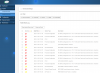
I've got a feeling that my Gen4 Xeon 8461V QS just got fried on X13DEI, all of a sudden started throwing critical errors after each 15-20 minutes in Windows 11 (ending with "clock watchdog timeout" BSOD) and after 5 minutes in BIOS (BIOS was just freezing), I've disconnected all possible devices (incl Sound, VGA, USB, etc.), reset bios, reinstalled windows, left only single RAM, resocketed CPU, all PSU cables, all the same..
1701020186248.png

I guess will have to ditch Sapphire Rapids platform in the end and go with regular customer grade products.

TBH partially likely my fault, was relocating MCIO-to-SFF8654 cable/board with NVME drives and CPU fan cable has halted CPU1 (stuck in blades), eventually it has overheated.
I would expect thermal event to be kicked in with automatic throttling and emergency shutdown in worst case but it feels like this safety architecture elements might not be the strongest part of Sapphire Rapids for some reasons.

Will try to use slower drives as current one het really hot for some strange reasons too.

Update:
P.S. most likely this is a false alarm, if I use SATA drive then everything works just fine (passes native Intel Processor Diagnostics tests, CPU-Z benchmarks, HWInfo64, not crashing for hours, etc.), therefore I assume there's something with NVMe drives configuration (used different ones Micron/WD and on different slots), those are rapidly getting very hot, so probably some sort of issue with system waiting for response while drive is throttling down and system reports critical device timeout (while Windows was installed on those drives) or something.
Therefore will look for proper heatsink/cooling of NVMe controllers.
I've even plugged other devices into M.2 slots like WiFi/AX210 via M-key to A/E-key adapter and M.2 USB3 adapter (originally bought to be used in 2 slow x2 lanes slots going via PCH/C741) - those devices worked without causing any troubles.

Apologies for a slight negativity towards SPR. and bringing this into Xeon/ES area.
 
Last edited:
  • Like
Reactions: Dmitrij_S
I've seen about a month ago some QS reviews/benchmarks
were published from user labs on Emerald Rapids Xeons,
We have 2 weeks left until release,

has anyone seen already those ES/QS available on a broader second-hand markets yet?

With up to +40% performance gain and x16 channel memory
(although I'm locked to x8 with my 2S MB) on 5th gen (Raptor Cove)
vs Sapphire Rapids (Golden Cove) as well as "performance per watt" improvements
I'm not sure it's worth upgrading my 1S QS SPR cpu to same 2S 4th gen anymore,
feels like it would be a waste of money for nothing with current prices.
 
Last edited:
Granite Rapids is what you're waiting for, EMR is just a refresh that supports the next JEDEC memory standard and a few more cores. GNR with 12x MCR DIMM has a ton of theoretical bandwidth (almost a terabyte per second) but it's going to be really hard to hit 1TB/sec in real-world applications because of architectural limitations.
 
EMR is just a refresh that supports the next JEDEC memory standard and a few more cores.
without the disadvantages of the 4 tile structure. much lower IDLE power, better cores.
EMR fits in C741 LGA4677 boards.
GNR $2000 usd for a single socket mboard ? we will see....
edit: MS04-CE0 LGA4710 $1100
 
Last edited:
which 2S mboard do you have ?
SM X13DEI , therefore no ES for me.
Granite Rapids is what you're waiting for
GNR will have different socket unfortunately, replacing MB, coolers, possibly RAM, rebuilding a lot inside my case, too much of an effort (and money), therefore I'm more likely to wait out couple of years for a new platform, can not afford chasing each generation, I'm normally skipping 3-4 gens.
 
SM X13DEI , therefore no ES for me.
but not locked to x8 mem. with two CPU you have x16 RAM.
and the BIOS 1.4 for your X13DEI includes EMR stepping A0(ES2) and A1(QS)
but means not A0 is working, needs to be proofed once the A0s come available.
C06F1 A0
C06F2 A1
 
Last edited:
  • Like
Reactions: sam55todd
without the disadvantages of the 4 tile structure. much lower IDLE power, better cores.
EMR fits in C741 LGA4677 boards.
GNR $2000 usd for a single socket mboard ? we will see....
Are the 4 tiles actually a disadvantage? AMD seems to get away with many chiplets without an issue.
 
Are the 4 tiles actually a disadvantage? AMD seems to get away with many chiplets without an issue.
AMD has disadvantages because the IF HUB, IF interconnects(IFPHY<-copper->IFPHY) are slow and asynchronious. latencies will be lower with out chiplets.
AMD increased the L3 to compensate bad memory latencies, but 8 core have 32mb L3 and can not benefit form the other CCDs L3 far away.
AMD has done this only to get better prices for silicon. all SKUs use same core DIEs but different count. only IOD are different on platforms.
Intel wanted faster interconnects and uses many EMIB's interfaces between the Tiles which draw much more power than expected.
EMR reduced the count to 3x EMIB on XCC configs (SPR = 10x EMIB)
edit: link
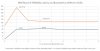
A Ryzen 9 7950X3D with Zen 4 cores achieves a minimum DRAM latency of 83 ns within a CCD when only one core requests data.
As the number of cores increases, this latency increases significantly to up to 415 ns when five cores request a high bandwidth.
Chips-and-Cheese-AMD-Zen-4-Latency-Spike-pcgh.jpg
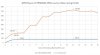
Threads with high bandwidth and threads that require low latency should ideally be executed on different CCDs in Zen 4. However, alternating execution of bandwidth-intensive tasks should be avoided at all costs - in extreme cases, the latency can rise to as much as 731 ns.
Chips-and-Cheese-AMD-Zen-4-Latency-Spike-2-pcgh.jpg
 
Last edited:
  • Like
Reactions: Bert
Does anyone know the difference between these two CPUs? Both are listed as Xeon W-3345 QS. Both show the same S-spec (SRKSU). There’s are 20 core and 24 core models listed. Officially, the 3345 is 24 core. I can’t find mention of a 20 core version anywhere, but on some of the 20 core listings they show screenshots of it running with 20 cores.

I’m planning on putting one in an X12SPA. QS there should be no issues, correct?

20 Core: Intel Xeon W-3345 QS Version 20C 3.0GHz 250W LGA4189 DDR4 3200 CPU Processor | eBay

24 Core: Intel Xeon W-3345 QS 3.0GHz 24C/48T LGA4189 36mb 250W CPU Workstation | eBay