For those who are interested in this very long forum thread, here is a TLDR version.
I used the
Instant Data Scraper browser extension to grab the text from all posts on all 147 thread pages (at the time of scraping). Find the txt file attached.
I then uploaded the .txt file to an LLM chat like chatGPT, and proceeded in asking for a summary or other specific info. Feel free to do the same.
shout out to everyone who contributed
interesting idea, here is some of the output i got from 15 or so prompts / reprompts
Thermal and Overheating Issues
Q: My mini PC runs extremely hot. What are the effective methods to lower its temperature?
A: Users have successfully lowered temperatures through a combination of physical modifications and BIOS adjustments.
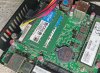
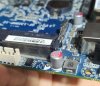
- Fix the Heatsink Gap:The most significant issue reported is a physical gap between the CPU/PCH die and the copper/aluminum heatsink block. This prevents proper thermal transfer to the chassis.
- File Down Standoffs: Carefully file down the motherboard mounting standoffs/pegs inside the case. This allows the motherboard to sit lower, closing the gap and ensuring direct contact between the CPU and the heatsink. Users report this method provides the most dramatic temperature drop, often by 20-30°C under load.
- Use Copper Shims: If you prefer not to file the standoffs, adding thin copper shims between the CPU and the heatsink can also bridge the gap.
- Re-apply Thermal Paste:The factory-applied thermal paste is often excessive, of poor quality, or poorly applied.
- Clean off all the old paste from the CPU, the heatsink block, and between the block and the aluminum case.
- Apply a quality thermal paste like Noctua NT-H2, Arctic MX-4, or Thermal Grizzly Kryonaut. For larger gaps, a high-viscosity paste like K5-Pro has been effective.
- Add a Fan:Although sold as fanless, adding a fan is a common and effective solution.
- Internal 40mm Fan: Most chassis versions have mounting holes for a 40x10mm fan on the bottom plate. A quiet fan like the Noctua NF-A4x10 (check for 5V or 12V versions depending on your power source) can significantly cool the RAM and NVMe drive. You can power it from the onboard fan header (if available) or the SATA power connector.
- External 120mm Fan: Placing a large, low-RPM USB-powered fan on top of or underneath the unit also works well to dissipate heat from the chassis.
- BIOS Power Tuning:The default BIOS settings are often too aggressive, causing the CPU to draw more power than the chassis can handle.
- Go to Advanced > Power & Performance > CPU - Power Management Control.
- Enable PL1 and set the power limit to 10000 (10W).
- Enable PL2 and set the power limit to 12000 or 15000 (12W-15W).
- Enable C-states to allow the CPU to enter low-power states when idle.
System Stability and Virtualization (Proxmox)
Q: My virtual machines (VMs) on Proxmox are unstable, freezing, or randomly rebooting. How can I fix this?
A: This is a widely reported issue, particularly with the N5105 CPU. Users have found success with the following solutions:
- Update the Proxmox Kernel: The most effective fix appears to be upgrading to a newer Linux kernel. The issue seems to be resolved for most users by installing the Proxmox "edge" kernel (e.g., 5.19 or newer).
- BIOS Settings:
- Disable C-States: Paradoxically, while enabling C-states helps with thermals, some users found that disabling them in the BIOS resolved VM stability issues. This comes at the cost of higher idle power consumption.
- Disable Intel ME (Management Engine): Some users reported improved stability after disabling the Intel ME in the BIOS.
- VM Configuration:
- Use PCI Passthrough: Instead of using virtual bridges (vmbr), pass the physical NICs directly through to the VM. This requires enabling IOMMU (VT-d) in the BIOS and grub.
- BIOS vs. UEFI: Set the VM to use SeaBIOS instead of UEFI.
- CPU Type: Set the CPU type to "host" in the VM settings to pass through the host CPU's features.
- Guest OS Settings (pfSense/OPNsense):
- Disable PowerD in the guest OS (System > Advanced > Miscellaneous).
- Disable hardware offloading features like Flow Control via system tunables.
Hardware and BIOS Issues
Q: How can I check if I received a retail CPU or an Engineering/Qualification Sample (ES/QS)?
A: In Windows, you can use tools like
CPU-Z or
HWiNFO64. They will explicitly label a CPU as "ES" or "QS". Intel's official Processor Identification Tool will also identify engineering samples. In Linux/BSD, you can use the dmidecode -t 4 command and check the "Version" and "Signature" fields for irregularities, though this is less definitive than Windows tools. The presence of a QDF number instead of an S-Spec number is a sure sign of a pre-production CPU.
Q: My system won't detect my NVMe drive or has other hardware compatibility problems. What are the known issues?
A:
- Dual NVMe Drives: There is a known issue, particularly on V3/V4 boards, where two Samsung NVMe drives will not work together; only one will be detected. The workaround is to use NVMe drives from different manufacturers (e.g., one Samsung and one WD/Seagate/Kingston) or two non-Samsung drives. The problem appears related to the Phison controller on some drives.
- SATA M.2 Drives: Some users report that M.2 SATA SSDs are not recognized. The M.2 slots appear to be wired for NVMe (PCIe) only.
- RAM: The units are generally compatible with DDR4 SODIMMs, including single and dual-rank modules up to 32GB (2x16GB). Some users have even successfully run 64GB of RAM, though the official CPU spec is lower.
Q: How do I update the BIOS, and what if a bad flash bricks the device?
A: The manufacturer CWWK provides BIOS updates on its website. The recommended flashing method is to use Ventoy to create a bootable USB drive with the BIOS .iso file. If a flash fails and there is no video output, CWWK support has provided a "blind flash" recovery method that involves booting from a specially prepared USB drive and pressing specific keys (Enter, then E) at certain intervals to initiate the flash process without a display.
Q: My unit won't boot without a monitor connected. How can I run it headless?
A: This is a common issue. You can either use a cheap
HDMI dummy plug to simulate a connected display or go into the BIOS and change the primary console output from display to the
serial port.
Seller and Purchase Advice
Q: I have an issue with my unit and the seller (Topton) is unresponsive. What should I do?
A: Many users report that sellers like Topton are responsive before a sale but become unhelpful or try to delay until the dispute window closes.
- File a Dispute Immediately: Do not wait. Use the AliExpress dispute system within the 15-day window after confirming delivery. If that window has passed, file a dispute directly with PayPal or your credit card company.
- Be Persistent: Clearly document the issue with photos and logs. Reject offers that are unreasonable (e.g., partial refunds for a major fault, or asking you to pay for expensive return shipping on a faulty item).
- Preferred Seller: The general consensus is that buying directly from the manufacturer's store, CWWK (also appears as Loksing), provides a much better experience with superior build quality, faster shipping, and outstandingly responsive technical support compared to resellers like Topton or KingNovy.
Power Supply and PoE
Q: The power supply included with my mini PC seems cheap and unreliable. What are some recommended replacements?
A: Many users report that the stock Dajing power adapters are of low quality and can be unreliable. For improved stability and safety, users have successfully switched to power supplies from reputable brands like
Mean Well (e.g., GST40A12, GST60A12) or an
Anker Nano IIUSB-C PD charger paired with a USB-C to DC barrel adapter cable. The required barrel plug size for these devices is typically
5.5mm x 2.5mm. Note that some replacement power supplies may come with a 5.5mm x 2.1mm plug, which would require a simple adapter to fit.[1]
Q: Is it possible to run these mini PCs using Power over Ethernet (PoE)?
A: Yes, users have successfully powered their units with
PoE+ splitters. You will need a splitter that supports the 802.3at (PoE+) standard and is capable of delivering at least 24W at 12V. Models from DSLRKIT and HKBTM have been reported to work well. Be aware that you may need to manually configure your PoE switch to guarantee the full power budget to the port, as some splitters may not correctly negotiate the required power level via LLDP.[1]
Q: I can't get keyboard input on the RJ45 serial console port. How do I fix it?
A: The inability to send commands through the serial port is due to a non-standard pinout. The port is not wired like a typical Cisco console port. While the output pin might align, the input (RX) pin is located on pin 5 instead of the more common pin 3. To resolve this, you must use a console cable with a compatible pinout, such as one designed for an
Allied Telesyn device, or create your own custom-wired adapter.[1]
Q: What is the latest operating system support for the newer i226-V NICs?
A: As of late 2022, support for the i226-V NIC is mature in most modern operating systems:
- pfSense: Not supported in the stable CE 2.6 release. However, it is fully supported in pfSense Plus 22.05 and the developmental pfSense CE 2.7 snapshots.[1]
- OPNsense: Works out-of-the-box in versions 22.7 and newer.[1]
- Linux (Proxmox, Ubuntu, etc.): Supported by modern Linux kernels. It has been confirmed to work in Proxmox 7.2, Ubuntu 22.04, and recent VyOS nightlies.[1]
- Windows: Still requires a manual driver installation using the driver package from Intel's website, as the drivers are not yet available through Windows Update.[1]