
Any windows 11 users having difficulty installing Intel Network Driver 29.4? Keeps popping up through intel's driver and update software, but fails to install every time.
Minisforum MS-01 PCIe Card and RAM Compatibility Thread
- Thread starter Patrick
- Start date
You are using an out of date browser. It may not display this or other websites correctly.
You should upgrade or use an alternative browser.
Notice: Page may contain affiliate links for which we may earn a small commission through services like Amazon Affiliates or Skimlinks.
hello,
I've bought an 13900H a month ago and put it work moving some of my VMs in there (proxmox cluster). 3 very light load VMs, 3 LXCs and a3 nodes k8s cluster. In total the average load is 26-27%.
The fan has started to spin constantly not very loud but that continuous whine can be annoying after a while, on top of that noticed that temps are going very high
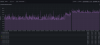
I've read that repaste the thermal paste can improve the temps? Or could be something else?
Also with the recent discount bought a second ms-01 but a 12900H this time, in case should I repaste also that before i start using it?
Thanks
I've bought an 13900H a month ago and put it work moving some of my VMs in there (proxmox cluster). 3 very light load VMs, 3 LXCs and a3 nodes k8s cluster. In total the average load is 26-27%.
The fan has started to spin constantly not very loud but that continuous whine can be annoying after a while, on top of that noticed that temps are going very high
Code:
root@zep-pve-02:~# sensors
nvme-pci-0100
Adapter: PCI adapter
Composite:    +56.9°C  (low  = -40.1°C, high = +119.8°C)
                       (crit = +129.8°C)
Sensor 1:     +75.8°C  (low  = -40.1°C, high = +139.8°C)
Sensor 2:     +56.9°C  (low  = -40.1°C, high = +119.8°C)

acpitz-acpi-0
Adapter: ACPI interface
temp1:        +27.8°C

coretemp-isa-0000
Adapter: ISA adapter
Package id 0:  +86.0°C  (high = +100.0°C, crit = +100.0°C)
Core 0:        +85.0°C  (high = +100.0°C, crit = +100.0°C)
Core 4:        +76.0°C  (high = +100.0°C, crit = +100.0°C)
Core 8:        +81.0°C  (high = +100.0°C, crit = +100.0°C)
Core 12:       +86.0°C  (high = +100.0°C, crit = +100.0°C)
Core 16:       +79.0°C  (high = +100.0°C, crit = +100.0°C)
Core 20:       +79.0°C  (high = +100.0°C, crit = +100.0°C)
Core 24:       +79.0°C  (high = +100.0°C, crit = +100.0°C)
Core 25:       +79.0°C  (high = +100.0°C, crit = +100.0°C)
Core 26:       +79.0°C  (high = +100.0°C, crit = +100.0°C)
Core 27:       +79.0°C  (high = +100.0°C, crit = +100.0°C)
Core 28:       +79.0°C  (high = +100.0°C, crit = +100.0°C)
Core 29:       +79.0°C  (high = +100.0°C, crit = +100.0°C)
Core 30:       +79.0°C  (high = +100.0°C, crit = +100.0°C)
Core 31:       +79.0°C  (high = +100.0°C, crit = +100.0°C)

nvme-pci-5800
Adapter: PCI adapter
Composite:    +43.9°C  (low  = -273.1°C, high = +89.8°C)
                       (crit = +94.8°C)
Sensor 1:     +43.9°C  (low  = -273.1°C, high = +65261.8°C)
Sensor 2:     +57.9°C  (low  = -273.1°C, high = +65261.8°C)
I've read that repaste the thermal paste can improve the temps? Or could be something else?
Also with the recent discount bought a second ms-01 but a 12900H this time, in case should I repaste also that before i start using it?
Thanks
Has anyone successfully connected a DEG1 from a PCIe card?
I have tried installing a PCIe card to add an Oculink port, a PCIe card to add an M2 slot and an adapter to convert the M2 to an Oculink port, but it does not work.
So far, my eGPU has never shown up in the lspci command, and on some cards, the BIOS did not even start up.
Yes I got it working and it is passthrough to a windows vm for gaming and ollama vm. I am assuming you have powered off your server first as it is not hot pluggable? What cards are you using?
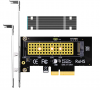
I am using these:
GLOTRENDS PA09-HS M.2 NVMe to PCIe 4.0 X4 Adapter with M.2 Heatsink for 2280/2260/2242/2230 M.2 NVMe SSD
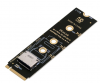
chenyang Oculink SFF-8612 to PCI-E 4.0 NVME M.2 M-Key Host Adapter Support 2230/2242/2260/2280 for U.2 SSD & eGPU
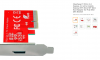
And below does not work so stop wasting your time lol:
Last edited:

I'm new to the MiniPC/Servers space. Currently using an old Dell R710 2U Rackmount server hosting VM's via ESXI using 4 SATA HD's running in a RAID 10.
I bought a MS-01 and am looking at migrating off of the R710 and am looking for a good bang for the buck external storage solution that I can put my existing 4 Hard Drives into and host VHD's like I do today in my R710.
Does anyone have any thoughts on a small, quiet and relatively cheap ($< 300) approach?
Appreciate it!
Last edited:
I've been bashing my head against the wall trying to figure out some issues I am seeing with LACP bonding the 10g NICs and wondering if anyone has come across anything similar. I have 4 MS01s, two i9-13900H (v1.22 bios, 96gb RAM, two NVME drives each) and two i5-12600H (v1.26 bios, 64gb RAM, two NVME drives each). Three of these are running in a Proxmox ceph cluster, and the 4th i5 lives in a separate three node ceph cluster. These clusters are running in separate networks/locations. The 10gig ports are all connected via DACs to USW Aggregation switches, with LACP bonding and layer 3+4 hashing policies enabled in Proxmox and on the switch. Links are being reported as 20gig. Everything looks great, except I have been unable to get >10gig speeds even when using multiple clients in iperf and when benchmarking ceph despite going through pages and pages of forum and reddit posts trying every config tweak I've come across. Using Proxmox 6.8.12 and Ceph 18.2.4 in both clusters.
What's really driving me crazy here is in the second cluster that has two non MS01 nodes, I AM able to see the expected increased speed. Ceph sequential reads are clocking in at ~15gig and I can get nearly 20gig when running multiple iperf clients. But here is the kicker; I can only see the speedup in iperf if one of the NON MS01 nodes is the server. As soon as I try using the MS01 as the server, I drop back down to 10gig total across multiple clients. The only difference I've spotted so far is that the MS01's are using the i40e NIC driver and the others are using ixgbe.
Other than this issue, these guys have all been rock solid with reasonable temps and vpro working across the board.
EDIT: Noticing this in the logs
kernel: i40e 0000:02:00.0: PCI-Express: Speed 8.0GT/s Width x4
kernel: i40e 0000:02:00.0: PCI-Express bandwidth available for this device may be insufficient for optimal performance.
kernel: i40e 0000:02:00.0: Please move the device to a different PCI-e link with more lanes and/or higher transfer rate.
Possible there are insufficient PCIE lanes for both NICs running at capacity in parallel?
Last edited:
Give me a little more time and I will try to redesign it to make it scalable, which takes a lot of time. The case is 2U as it is design to go big or go home with the fan (120 mm). The one I posted above fits perfectly in 10" rack. To make it completely scalable going to 19" rack with one or two ms01 side-by-side I would need to give a choice for different use cases. I will let you guys know when it's done
I'd love the 10" STL version as well, if you're ok with releasing it.
I got the MS-01 with the Black Friday deal with:
- i9-13900H
- 32GB RAM
- 1TB SSD (not sure brand or speed it comes with)
still sitting in the an unopened Amazon box next to me waiting for my 3d printed 140mm fan cover to be done.
I also have available:
- x4 4TB Samsung 990 Pro (PCIe 4.0 x4)
- x1 2TB Samsung 980 Pro (PCIe 4.0 x4)
- x1 256GB Samsung 980 Pro (PCIe 4.0 x4)
- x1 1TB Samsung 970 Evo (PCIe 3.0 x4)
I plan on running PVE with 1 Debian VM for Portainer/Dockers, 1 VM for TrueNAS (if possible), and ~1-2 other VM's to tinker and explore with as this is my first journey in homelabing.
My question is, how would you best utilize these these m.2 NVMe drives I have available? This whole lane thing is hard for me to completely wrap around my brain.
The little I have learned for sure so far is I should probably use the 1TB Samsung 970 Evo since it is the slowest as the main ProxMox drive. Thoughts?
Can I run at least x2 990 Pro's in the other slots with max speeds? I have a feeling the answer is no.
What if I take out the WiFi chip and buy the right sized m.2?
Can I utilize the PCIe 4.0 x16 slot for any type of expansion to help out? Maybe attaching to a JBOD?
I have started to look into PCIe slots used for Synology Expansions, and slowly going over this massive thread... perhaps adding more space that way, but it's my understanding that will screw with the speeds of the other slots...?
TLDR
Basically, what would you guys do with what I have, and what can I do to beef this thing up to its max potential for storage and speed?
Or perhaps I should return the MS-01 and do a completely custom build? The small form factor is not an issue as I was planning on printing a 1U rack -- I'm just looking for low power and quiet fans.
Please.. Where can I get this prototype board? I am printing the same cooling system now and would be willing to help beta test. What specific drives are you using?
- i9-13900H
- 32GB RAM
- 1TB SSD (not sure brand or speed it comes with)
still sitting in the an unopened Amazon box next to me waiting for my 3d printed 140mm fan cover to be done.
I also have available:
- x4 4TB Samsung 990 Pro (PCIe 4.0 x4)
- x1 2TB Samsung 980 Pro (PCIe 4.0 x4)
- x1 256GB Samsung 980 Pro (PCIe 4.0 x4)
- x1 1TB Samsung 970 Evo (PCIe 3.0 x4)
I plan on running PVE with 1 Debian VM for Portainer/Dockers, 1 VM for TrueNAS (if possible), and ~1-2 other VM's to tinker and explore with as this is my first journey in homelabing.
My question is, how would you best utilize these these m.2 NVMe drives I have available? This whole lane thing is hard for me to completely wrap around my brain.
The little I have learned for sure so far is I should probably use the 1TB Samsung 970 Evo since it is the slowest as the main ProxMox drive. Thoughts?
Can I run at least x2 990 Pro's in the other slots with max speeds? I have a feeling the answer is no.
What if I take out the WiFi chip and buy the right sized m.2?
Can I utilize the PCIe 4.0 x16 slot for any type of expansion to help out? Maybe attaching to a JBOD?
I have started to look into PCIe slots used for Synology Expansions, and slowly going over this massive thread... perhaps adding more space that way, but it's my understanding that will screw with the speeds of the other slots...?
TLDR
Basically, what would you guys do with what I have, and what can I do to beef this thing up to its max potential for storage and speed?
Or perhaps I should return the MS-01 and do a completely custom build? The small form factor is not an issue as I was planning on printing a 1U rack -- I'm just looking for low power and quiet fans.
Here are some updates about my 6 M.2 MS-01 (5x4TB + 1x500TB).
Just to remind you, each M.2 has a heatsink, and I have a fan blowing air with this 3D-printed cooling system.

MS-01 Fan Cover by some3duser | Download free STL model | Printables.com
Panel replacement with 140mm fan mount for minisforum ms-01 mini computer. | Download free 3D printable STL modelswww.printables.com
Please.. Where can I get this prototype board? I am printing the same cooling system now and would be willing to help beta test. What specific drives are you using?
Last edited:
Finally got my MS-01 running, mostly.
64GB RAM CT2K32G56C46S5
4TB 990 PRO in 4x4 slot
1TB 990 PRO in 3x4 slot
512GB WD Red SN700 in 3x2 slot
Wifi card removed
This configuration works fine running Debian 12. Once I pop in my Radeon PRO W6400 in, I'm hung at a black screen on boot. No logo no nothing. Ethernet port has LEDs on. No keyboard response. Taking the card out still leaves me with the black screen. I have to clear the cmos by removing the battery for a few min. Then it boots back up fine. I've tried it a few times, same problem almost everytime. Once in a great while, it'll actually boot with the card in, but I'd say its 1 in 20 or worse.
Edit: Updated to latest BIOS already
Any ideas?
Last edited:
I've been bashing my head against the wall trying to figure out some issues I am seeing with LACP bonding the 10g NICs and wondering if anyone has come across anything similar. I have 4 MS01s, two i9-13900H (v1.22 bios, 96gb RAM, two NVME drives each) and two i5-12600H (v1.26 bios, 64gb RAM, two NVME drives each). Three of these are running in a Proxmox ceph cluster, and the 4th i5 lives in a separate three node ceph cluster. These clusters are running in separate networks/locations. The 10gig ports are all connected via DACs to USW Aggregation switches, with LACP bonding and layer 3+4 hashing policies enabled in Proxmox and on the switch. Links are being reported as 20gig. Everything looks great, except I have been unable to get >10gig speeds even when using multiple clients in iperf and when benchmarking ceph despite going through pages and pages of forum and reddit posts trying every config tweak I've come across. Using Proxmox 6.8.12 and Ceph 18.2.4 in both clusters.
What's really driving me crazy here is in the second cluster that has two non MS01 nodes, I AM able to see the expected increased speed. Ceph sequential reads are clocking in at ~15gig and I can get nearly 20gig when running multiple iperf clients. But here is the kicker; I can only see the speedup in iperf if one of the NON MS01 nodes is the server. As soon as I try using the MS01 as the server, I drop back down to 10gig total across multiple clients. The only difference I've spotted so far is that the MS01's are using the i40e NIC driver and the others are using ixgbe.
Other than this issue, these guys have all been rock solid with reasonable temps and vpro working across the board.
EDIT: Noticing this in the logs
kernel: i40e 0000:02:00.0: PCI-Express: Speed 8.0GT/s Width x4
kernel: i40e 0000:02:00.0: PCI-Express bandwidth available for this device may be insufficient for optimal performance.
kernel: i40e 0000:02:00.0: Please move the device to a different PCI-e link with more lanes and/or higher transfer rate.
Possible there are insufficient PCIE lanes for both NICs running at capacity in parallel?
Self update, after a lot of examination I was able to determine that when bonded in LACP mode with a supposedly compatible switch (Unifi Aggregation, regular with 8 SFP+ ports not pro), only one of the two nics was being used for RX. This was true even when using multiple clients, IP addresses, ports, and hashing algos. This did not occur with the non MS01 nodes, and I saw this behavior for all of my MS01 nodes. I've tried updating the NIC firmware and various versions of proxmox kernel. I eventually switched the MS01s to balance-rr vs LACP and magically it all works now, seeing around 18gb of total bandwidth at times. Curious if anyone has checked with 3rd party NICs using the PCIE port if they are seeing similar behavior. I can't tell if this is an issue with the MS01's, the unifi switch, or the i40e drivers right now.
A win10 client running crystaldiskmark seq1m q8t1 benchmark is getting 2235mb/s read and 383mb/s write using the ceph storage pool (2TB samsung 990 pro's in each of the mini's)
The t1000 8gb works fine as well in mine
Hi, sorry to bring this up: I'm struggling to make it work with a T1000 8GB, it seems not to properly start.
Did you make any particular setting?
My hardware:
- 2x48 Crucial RDIMM
- 1x Lextar 790 Nvme
Thank you.
Self update, after a lot of examination I was able to determine that when bonded in LACP mode with a supposedly compatible switch (Unifi Aggregation, regular with 8 SFP+ ports not pro), only one of the two nics was being used for RX. This was true even when using multiple clients, IP addresses, ports, and hashing algos. This did not occur with the non MS01 nodes, and I saw this behavior for all of my MS01 nodes. I've tried updating the NIC firmware and various versions of proxmox kernel. I eventually switched the MS01s to balance-rr vs LACP and magically it all works now, seeing around 18gb of total bandwidth at times. Curious if anyone has checked with 3rd party NICs using the PCIE port if they are seeing similar behavior. I can't tell if this is an issue with the MS01's, the unifi switch, or the i40e drivers right now.
A win10 client running crystaldiskmark seq1m q8t1 benchmark is getting 2235mb/s read and 383mb/s write using the ceph storage pool (2TB samsung 990 pro's in each of the mini's)
I posted about similar weirdness with MS01 LACP bonding months ago. Interpreting the responses to my post would lead one to believe that I'm doing something wrong. I feel like I understand LACP setup requirements pretty well and how it should work. But I was not seeing that with the MS01. Plus, the vPro management of the MS01 was extra flaky for me when both 2.5g ports were bonded with LACP.
Some users reported that LACP bonding and even vPro management worked fine for them.
Anyone had any success exposing the MS-01's sensors to ESXI. When I go to Monitor | System Sensors it's giving me an error "This system has no IPMI capabilities, you may need to install a driver to enable sensor data to be retrieved." See attached screenshot.
Thanks!
Attachments

Can confirm Radeon PRO W6400 works if you tape pins 5&6. Does not work without tape on them.
Also, had to trim the plastic on the MS-01 case slightly to get DP connectors to fully seat.
So compatible, but not plug-in and go.
Hello guys,
I am grateful this thread exist, it is insightful not only for MS-01 but for general systems knowledge.
Recently, I ordered one i5-12600H MS-01 and I am looking for a general deployment for proxmox:
- I am thinking if it is possible to have a 4G/5G module instead of the wifi module, if yes, which one I can get?.
- I want to create a RAID1 with two M2 SSD but I am not sure of this will add any value as most of the data will be in my NAS that I will connect via NFS.
- I want to use Crucial's 48G 5600MHz RAMs from . However, I am not sure if they work with the i5-12600H. If no, I will simply get the Crucial 's 32G 5200MHz RAMs
Any other feedback from the i5 model? I am not sure if I should re-paste the CPU or adding an fan as a lot of people are doing. I don't think the server will be under high load.
Thanks a lot,
you can't have rdimms in ms01. i think that's a typo.Hi, sorry to bring this up: I'm struggling to make it work with a T1000 8GB, it seems not to properly start.
Did you make any particular setting?
My hardware:
- 2x48 Crucial RDIMM
- 1x Lextar 790 Nvme
Thank you.
i have been using t1000 8gb in one of ms01 for a while with rhel9 at first and later with proxmox passed to a rhel9 vm.
i am not so sure there is anything special about that card in ms01.
been using it for transcoding and it worked well. i think igpu is more suitable for that job.
as for installation - nothing special needed to be done - just plug in card and move along with your day.
if it is an early batch of ms01 - you might need to tape 5&6 pin like person above did for w6400
on a side node - that ms01 had x710 failure few days ago and minisforum support does not reply at all.
i did send them mail with photos/videos and huge description of a problem after making sure it is definitely failed.
had to send device back to seller (at my own descretion) since it was purchased locally.
you can't have it on ms01Anyone had any success exposing the MS-01's sensors to ESXI. When I go to Monitor | System Sensors it's giving me an error "This system has no IPMI capabilities, you may need to install a driver to enable sensor data to be retrieved." See attached screenshot.
Thanks!
I posted about similar weirdness with MS01 LACP bonding months ago. Interpreting the responses to my post would lead one to believe that I'm doing something wrong. I feel like I understand LACP setup requirements pretty well and how it should work. But I was not seeing that with the MS01. Plus, the vPro management of the MS01 was extra flaky for me when both 2.5g ports were bonded with LACP.
Some users reported that LACP bonding and even vPro management worked fine for them.
I did not attempt to do bonding on the 2.5g nics, just the 10g SFP+ nics (using one 2.5g for vPro and the other for non ceph vlan connectivity). I was going to try putting a spare x520 card into the pcie slot and test bonding that with the onboard SFP+ but the protrusion of the SFP+ cage prevented the nic from clearing and I can't figure out how to gracefully remove the plastic case bits without breaking something.
The latest BIOS update (version 1.26) mentions that it updates Intel Microcode, presumably to address the instability issues and CPU degregation.
However, after applying version 1.26 and checking the microcode version, it appears to be an older version that doesn't include the fixes introduced in Microcode update 0x12B, which address these instability problems.

Is this behavior unique to my system, or are others experiencing the same? For those who haven't manually applied the microcode updates but have updated to BIOS version 1.26, what microcode version are you seeing?
root@pve:~# grep microcode /proc/cpuinfo | uniq
microcode : 0x411c
However, after applying version 1.26 and checking the microcode version, it appears to be an older version that doesn't include the fixes introduced in Microcode update 0x12B, which address these instability problems.
Intel Core 13th and 14th Gen Desktop Instability Root Cause Update
Following extensive investigation of the Intel® Core™ 13th and 14th Gen desktop processor Vmin Shift Instability issue, Intel can now confirm the root cause diagnosis for the issue. This post will cover Intel’s understanding of the root cause, as well as additional mitigations and next steps for...
community.intel.com
Is this behavior unique to my system, or are others experiencing the same? For those who haven't manually applied the microcode updates but have updated to BIOS version 1.26, what microcode version are you seeing?
root@pve:~# grep microcode /proc/cpuinfo | uniq
microcode : 0x411c
Last edited:
The latest BIOS update (version 1.26) mentions that it updates Intel Microcode, presumably to address the instability issues and CPU degregation.
However, after applying version 1.26 and checking the microcode version, it appears to be an older version that doesn't include the fixes introduced in Microcode update 0x12B, which address these instability problems.
Intel Core 13th and 14th Gen Desktop Instability Root Cause Update
Following extensive investigation of the Intel® Core™ 13th and 14th Gen desktop processor Vmin Shift Instability issue, Intel can now confirm the root cause diagnosis for the issue. This post will cover Intel’s understanding of the root cause, as well as additional mitigations and next steps for...community.intel.com
Is this behavior unique to my system, or are others experiencing the same? For those who haven't manually applied the microcode updates but have updated to BIOS version 1.26, what microcode version are you seeing?
root@pve:~# grep microcode /proc/cpuinfo | uniq
microcode : 0x411c
This is what I am getting:
# grep microcode /proc/cpuinfo | uniq
microcode : 0x4123
I reached out to minisforum for the latest bios before they released it and got this:
I don't know if it is any different from the version released on their website.
Last edited:
Similar threads
- Replies
- 40
- Views
- 27K
- Replies
- 19
- Views
- 10K
- Replies
- 0
- Views
- 2K
