
Riverbed CX-770 $30BO
- Thread starter hmartin
- Start date
Notice: Page may contain affiliate links for which we may earn a small commission through services like Amazon Affiliates or Skimlinks.

Wow!! STH gets around! Patrick should be proud?
I have added one in a "side car" configuration. Just dremeled a slot in the side for a flex riser and bolted the cards braket to the side. I did have stability issues untill I soldered a +12v to the riser. Can share pictures later this week.I've been running Pfsense and Opnsense on one of these (CX-770) for a couple years. Recently got 10 gig internet and had to move to another device... Has anyone used a riser cable and put a 10g Nic in one of these? Any pics of how the card is contained?
I really couldn't find a good place internally to add one. Also the placement of the rise slot is too far into the case for a standard right angle to flush mount out of the side. I had though about removing a HDD and using something like this odd ball for Ali Express:https://www.aliexpress.us/item/3256806453870255.html, not sure if it would work
The PCI-E slot is also backward, but I can confirm risers matching search terms "IBM x3550 x3650 M2 M3, FRU 43V7067 PCIe" do fit the 770's slot. While they physically fit the slot, I don't know if they are actually functional. Assuming they are functional, you'd need to find a card with proper dimensions to fit inside the case while avoiding the CPU heatsink, then do a little sheetmetal work. I wish you the best of luck, and please post here if you find the right card.I've been running Pfsense and Opnsense on one of these (CX-770) for a couple years. Recently got 10 gig internet and had to move to another device... Has anyone used a riser cable and put a 10g Nic in one of these? Any pics of how the card is contained?
Attachments
-
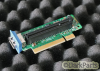 412.9 KB Views: 38
i'm curious what people made out of these.. i have 3 and i use them as proxmox cluster with ceph and they run quite well.. i probably spent much more getting the memory and drives, but definitely worth it in the end..
I was wondering if any of the NIC's are preferred on these boxes. My notes show: (2) Intel 210I (igb4, igb5) & (4) Intel I347-AT4 (igb0, igb1, igb2, igb3).
I asked perplexity.ai and got this answer
Now I'm wondering what you all think?
I asked perplexity.ai and got this answer
Performance
Both the I210 and I347-AT4 are Gigabit Ethernet controllers, capable of speeds up to 1 Gbps
6
7
. In terms of raw throughput, they should perform similarly for most home and small business applications.Features
I210:
I347-AT4:
- Single-port controller
- Supports advanced features like Intel Virtualization Technology for Connectivity (VT-c)
- Optimized for server and network appliance use
Reliability and Support
- Quad-port controller
- Designed for desktop and mobile applications
- Supports basic networking features
Intel is known for providing long-term driver support and reliability for their networking products
1
. Both controllers should benefit from this, but the I210 may have an edge in terms of longevity and enterprise-grade reliability.Use Case Considerations
For a WAN connection, a single-port controller like the I210 is typically sufficient. However, for your LAN, the quad-port I347-AT4 could provide more flexibility, allowing you to connect multiple devices or set up link aggregation for increased bandwidth
2
.Recommendation
For your specific use case:
However, if you only need a single port for both WAN and LAN, the I210 might be the better overall choice due to its advanced features and server-grade design
- WAN: The Intel I210 would be a solid choice due to its optimization for server and network appliance use.
- LAN: The Intel I347-AT4 could be more versatile with its quad-port design, allowing for multiple connections or link aggregation.
8
.Remember that the actual performance difference in a home or small business setting may be negligible, and factors like your internet speed and overall network configuration will likely have a greater impact on your experience than the specific controller model.
Now I'm wondering what you all think?
The port pairs igb0-igb1 and igb2-igb3 have physical (Fail-to-Wire) bypass capability, meaning they can become the equivalent of cross-over couplers when the 570/770 powers down or reboots. Yes you can and, in most scenarios should, disable bypass in the BIOS. But there's always the danger of fat-fingering the setting back to enabled. For this reason I limit them to LAN side use. Even then I am careful to avoid connecting a potential bypass pair to the same switch. On the other hand, with bypass enabled you can do some interesting things like controlling/inspecting traffic between devices/networks while powered on, yet ensuring connectivity in the event of power loss.I was wondering if any of the NIC's are preferred on these boxes. My notes show: (2) Intel 210I (igb4, igb5) & (4) Intel I347-AT4 (igb0, igb1, igb2, igb3).
I asked perplexity.ai and got this answer
Now I'm wondering what you all think?
The Pri port igb4 is an interesting critter. The BMC board (which mounted under the drive tray and removable) uses igb4. The BMC is very basic but it does offer power control, so probably not a good thing to expose on the WAN side! Unless you remove the BMC, keep igb4 on the LAN side.
The Aux port igb5 is, IMO, the safest port to use WAN-side in a fresh-out-of-the-box scenario.