Hello from Ukraine - Software Developer and Storage Researcher

Notice: Page may contain affiliate links for which we may earn a small commission through services like Amazon Affiliates or Skimlinks.
Hi everyone! I'm a software developer and storage researcher from Ukraine. I've been programming for over 25 years, and for the past 15+ years I've been working at Hetman Software, where we develop software for analyzing storage systems and recovering lost data.

My main interests include RAID technologies, NAS systems, file systems, encryption, virtualization, and low-level storage structures.

We have a small test lab where we experiment with real hardware, including Dell PowerEdge servers, LSI, Areca, Adaptec and other RAID controllers, Synology and QNAP NAS devices, as well as Proxmox, TrueNAS, FreeBSD, and Linux storage environments.

One of our favorite activities is deliberately breaking things to understand how they work. We create RAID arrays, fill them with data, interrupt rebuilds or expansions, remove disks, delete partitions, and experiment with encrypted volumes and virtual machine storage. Then we examine the remaining metadata, investigate how the original storage was organized, and see what can actually be reconstructed.

Some experiments work as expected. Others produce surprising results, which are often even more interesting. If you have an interesting RAID, NAS, ZFS, or virtualization failure scenario that would be worth reproducing in a lab, I'd be happy to hear about it.
 
Fair question, @kapone and @linuxmanbg!

We develop commercial data recovery software, so yes, that's our business. But I'm not here to offer consultancy or pitch software licenses. I'm mainly interested in the technical side of storage: RAID reconstruction, NAS internals, file systems, encryption, and virtualization.

We have a small lab where we reproduce real storage failure scenarios, examine the remaining metadata, and investigate what can actually be recovered. Sometimes our experiments succeed, sometimes they don't, and both outcomes are useful.

I'd be happy to share our test setups, technical findings, and even unsuccessful experiments with the community. If I ever want to publish something specifically about our software, I'll check with the moderators first.

And if anyone has an interesting storage failure scenario they'd like to see reproduced on real hardware, I'm always open to suggestions!
Can you simulate a multi disk, multi-vdev failure on a multi-chassis (SAS expanders), ~2PB ZFS data store, without taking it offline? Because that's what I have and while my testing has been "thorough" in my mind, it never hurts to have more eyeballs.

index.php
 
everyone like pics of hardware, lol so if allowed you can share you lab space pics

Thanks, @marcoi! Over the years of developing software, we've had quite a variety of hardware come through our lab. Some devices were purchased specifically for testing, while others were used for particular recovery experiments. Here's a partial list of the equipment we've worked with:

RAID controllers:
  • Dell PERC 6/i, H310, H700
  • LSI MegaRAID SAS 84016E, 9280-4i4e, 3081E-R, 9265-8i
  • LSI 3ware 9650SE-4LPML, 9750
  • IBM ServeRAID M5016
  • Areca ARC-1210, ARC-1260
  • Adaptec ASR-6405
  • HP Smart Array P410, P410i, P420i
  • Supermicro AOC-USAS-S8iR
  • Fujitsu D2516-C11 GS1, D3116
  • Dawicontrol DC-624E
We've also tested motherboard RAID implementations, including AMD RAIDXpert2.

NAS systems:
  • Synology DS409, DS415+, DS418play, DS1621+, DS1815+, DS2422+, CS407
  • QNAP TS-412, TS-219P+, TS-439U-RP/SP
  • Thecus N4100Pro, N7700Pro
  • NETGEAR ReadyNAS
  • Buffalo TS5400D, HD-H1.0TGLR5 and other models
  • LaCie 5big Network 2
  • WD My Cloud Mirror
  • Zyxel NAS542
  • D-Link DNS-343
  • Cisco NSS3000
  • Promise SmartStor NS4300N
Servers and storage systems:
  • Dell PowerEdge R610 and R710
  • HP ProLiant DL380p Gen8
  • Infortrend ESDS 1012 RC
  • D-Link DSN-1100 SAN
  • IBM FlashSystem 5000
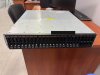
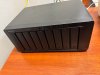
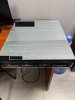
At the moment, our main test equipment includes a Dell PowerEdge R710, an Infortrend ESDS 1012 RC, and an IBM FlashSystem 5000. We also have several Synology NAS devices, including the DS418play, DS1815+, and some older models.

We don't really do server administration or operate production infrastructure. Our hardware is used almost exclusively for research and recovery experiments. We build storage configurations, fill them with test data, simulate failures, examine the remaining metadata, and then move on to the next experiment.

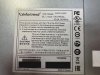
So our lab probably doesn't qualify as ServerPorn. :) It's more of a working test environment than a beautiful, neatly organized server rack. Here are a few photos of some of the equipment we're currently using.
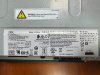
 

Attachments

  • ibm-storage-controller-label.jpg
    ibm-storage-controller-label.jpg
    163.8 KB · Views: 6
  • ibm-storage-array-front.jpg
    ibm-storage-array-front.jpg
    91.9 KB · Views: 6
  • synology-ds1815plus.jpg
    synology-ds1815plus.jpg
    121.8 KB · Views: 6
  • infortrend-esds1012rc-label.jpg
    infortrend-esds1012rc-label.jpg
    173.7 KB · Views: 6
  • infortrend-esds1012rc-overview.jpg
    infortrend-esds1012rc-overview.jpg
    89.3 KB · Views: 6
Can you simulate a multi disk, multi-vdev failure on a multi-chassis (SAS expanders), ~2PB ZFS data store, without taking it offline? Because that's what I have and while my testing has been "thorough" in my mind, it never hurts to have more eyeballs.

Haha, I think our standard instructions for your setup would sound like a comedy sketch:

Step 1: Shut down your server.

Step 2: Disconnect all the drives and connect them to a Windows PC. :)

Now, seriously.

I have to admit that I don't have hands-on experience administering storage systems anywhere near 2 PB in size. My background is in software development and low-level storage analysis rather than managing large production infrastructure.

That said, I'd be genuinely interested in getting your feedback on our software if you ever feel like experimenting with it. I'd be happy to provide you with a temporary license free of charge for testing. No obligations, just an opportunity to try it out and share your findings, including anything that doesn't work as expected.

I don't want this to come across as advertising, but we've implemented quite a few interesting capabilities for working with ZFS, including accessing datasets, snapshots, encrypted volumes, and analyzing virtual machine storage.

Of course, I'm not suggesting you experiment on your live 2 PB storage system! A smaller test pool or disk images would be perfectly fine. If you're interested, just send me a private message. I'd be curious to hear what you think from the perspective of someone running a storage environment of that scale.
 
So...what are you selling?
It doesn't take much of a search to find out…

And that's one more alternative to know of to Klennet and UFS Explorer RAID Recovery if you ever have a damaged array (including ZFS).
Then cars will fly before I deploy it in my environment. Oh wait...crap.
Is this what you're referring to? ;)
 
It doesn't take much of a search to find out…
https://hetmanrecovery.com/raid-data-recovery-software
And that's one more alternative to know of to Klennet and UFS Explorer RAID Recovery if you ever have a damaged array (including ZFS).
Already did that. I wanted the OP to say it in their own words, as to why they're here.

In their words, on their website "1,000,000 users and over 10,000 businesses use it...so...why're they here? Apparently they were founded in 2008, and yet they only found about STH now?

Could this be a fallout of the geo-political situation in Ukraine as we speak? Who knows. My experience with companies from that part of the world...prime example...Starwind...hasn't been all that great. They hounded me...even offered to pay a small sum...to write positive reviews about them. No, thank you.

And this software..it is closed source and apparently needs Windows to function (based on their website and screenshots). Those are two strikes against it.

And flying cars and Elon...I was being generously sarcastic... :D
 
That's exactly the kind of experiment I'd be interested in!

We've already been testing ZFS recovery in our lab, including RAIDZ, dRAID, native encryption, snapshots, and various disk failure scenarios.

I'd be happy to reproduce a specific ZFS failure scenario using our own hardware and test data, document the process, and share the results here.

Do you have a particular configuration or failure scenario in mind? For example, multiple disk failures, corrupted pool metadata, deleted datasets, or encrypted ZFS storage?

I'm especially interested in challenging real-world cases where conventional recovery methods may not be sufficient.
 
I missed this reply @hetmansoftware . If you're still doing this, I'd actually just be curious to see what files can be recovered from a failure on rebuild in both a RAIDZ2 and dRAID (2 parity, # data).

This is a simple scenario, but I think would be the most common one.
 
I missed this reply @hetmansoftware . If you're still doing this, I'd actually just be curious to see what files can be recovered from a failure on rebuild in both a RAIDZ2 and dRAID (2 parity, # data).

This is a simple scenario, but I think would be the most common one.
Thanks for suggesting this scenario, @DigiPizzabox!

It's an interesting case, and we'll add the RAIDZ2 and dRAID2 rebuild failure scenarios to our testing plans. We'll reproduce them in our lab and publish a video documenting the experiments, recovery results, and any limitations.

We've already been experimenting with ZFS data recovery in our lab. In one of our recent tests, we used Proxmox VE 9.1.1 with a three-disk ZFS RAIDZ1 pool containing virtual machines stored as ZVOL block devices and LXC containers stored in separate ZFS datasets.

We examined several recovery scenarios:
  • Reconstructing the ZFS RAIDZ1 pool directly from its member disks, without the original Proxmox system.
  • Recovering files and directories from LXC container datasets.
  • Extracting ZVOL virtual disks as RAW images, mounting them, and analyzing their internal filesystems.
  • Recovering deleted virtual machines and their ZVOLs.
  • Finding deleted LXC container datasets and recovering their files using a deeper scan.
The last two scenarios are particularly interesting because deleting a VM or container in Proxmox also removes its associated ZFS storage object. We investigated whether the remaining ZFS structures could still be identified and the data recovered.

To clarify the scope of this experiment, we focused primarily on logical deletion and recovery of ZFS storage objects, rather than deliberately corrupting ZFS metadata or data blocks.

We performed these tests using our own Hetman RAID Recovery software.

Here's a video demonstrating the experiment:

We'll share the results of the RAIDZ2 and dRAID2 rebuild failure experiments once we've completed the tests, including any unsuccessful recovery attempts.
 
Last edited:
But…how did you corrupt the ZFS dataset/zvol in the first place?
Good point, @kapone! We didn't deliberately corrupt ZFS metadata in this test. We simulated logical data loss by deleting VMs and LXC containers along with their associated ZVOLs and datasets, then attempted to recover them. Actual ZFS corruption would be a separate experiment.
 
  • Like
Reactions: etorix