
Numbers first, story after. One system: a Synology DS3622xs+ + DX1222 + 3 × WD Ultrastar DC HC680 27 TB HM-SMR. The 88SE9235 SATA controller behind the NAS's expansion connector (it sits on the DS3622xs+ board; the DX1222 hangs off it) is passed whole to a Linux guest running dm-zoned per drive → md RAID5 → dm-cache volume cache → LUKS2 → XFS, on kernel 7.2.6.
Member rebuild (24.6 TiB per member)
1.5 TiB of fresh 1 MiB sequential writes (fio, 8 files, encrypted pool)
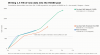
Plain members write every byte twice: first into the drive's own buffer, then into a sequential zone. Cached members write each byte about once. In the sustained phase the HC680s were only ~19 % busy. The attached chart shows the three runs over time.
DX1222 port multiplier (88SM9705): two drives writing through one multiplier get ~150 MB/s each, so ~300 MB/s together. Reads scale to ~520 MB/s together. It's the same on HC550s in burn-in, with FBS on, and it caps plain-member ingest at ~200 MB/s of user data. Hot-plug froze every drive on the multiplier for 12 s (pull) and 25 s (insert).
Guest kernel, same stack (60-s test, 1 O_DIRECT writer, 1 MiB writes): 24.6 MiB/s on Debian 6.12.107 vs 165.4 MiB/s on Ubuntu mainline 7.2.6.
Open risk: one NAS kernel panic captured in Synology's
Write-up, raw method and patches: GitHub - illofspeed/synology-host-managed-smr: Run host-managed SMR drives (WD HC680) with a Synology NAS: pass a whole SATA controller to a VMM guest and build dm-zoned + md RAID5 + LUKS2 + XFS in OpenMediaVault. Tested only on DS3622xs+ with DX1222 (not DS1821+ in this layout). Setup, boot chain, Hyper Backup target, monitoring, benchmarks, lessons.
Upstream patches (sent 2026-10-10; the dm-zoned series is under review): synology-host-managed-smr/patches/upstream/README.md at main · illofspeed/synology-host-managed-smr
Disclosure: I did the debugging, the patches and this write-up with the help of an AI coding assistant. All measurements are from my own hardware.
Member rebuild (24.6 TiB per member)
- Plain dm-zoned member: 80–93 MB/s for the first ~55 min while the ~250 GiB conventional-zone buffer absorbs writes. After that 26–30 MB/s, about 10 days, with no redundancy meanwhile.
- With a dm-zoned cache device (a NAS virtual disk behind the NAS NVMe cache): 73–178 MB/s, 2–3 days. The drive then writes only sequentially.
- Caveat: that was measured with DSM's SSD-cache sequential threshold at 0 while the NAS was rebuilding its own RAID. A rebuild at the default threshold with my patched module is untested.
1.5 TiB of fresh 1 MiB sequential writes (fio, 8 files, encrypted pool)
| Plain | Cached, threshold 524288 KB | Cached, threshold 1024 KB (default) | |
|---|---|---|---|
| First ~500 GiB | ~201 MB/s | ~66 MB/s | ~155 MB/s |
| After that | ~45 MB/s | ~90 MB/s | 41 MB/s for ~200 GiB, then 75–117 MB/s |
| Whole run | ~7 h (extrap.) | ~5¾ h (extrap.) | 5.1 h |
| Drive bytes per user byte | 2.76 | ~1.4 | ~1.5 |
| Limit | the drives | NAS NVMe insert path, ~170 MB/s | NAS HDDs |
Plain members write every byte twice: first into the drive's own buffer, then into a sequential zone. Cached members write each byte about once. In the sustained phase the HC680s were only ~19 % busy. The attached chart shows the three runs over time.
DX1222 port multiplier (88SM9705): two drives writing through one multiplier get ~150 MB/s each, so ~300 MB/s together. Reads scale to ~520 MB/s together. It's the same on HC550s in burn-in, with FBS on, and it caps plain-member ingest at ~200 MB/s of user data. Hot-plug froze every drive on the multiplier for 12 s (pull) and 25 s (insert).
Guest kernel, same stack (60-s test, 1 O_DIRECT writer, 1 MiB writes): 24.6 MiB/s on Debian 6.12.107 vs 165.4 MiB/s on Ubuntu mainline 7.2.6.
Open risk: one NAS kernel panic captured in Synology's
mv14xx driver (DSM's own controller, not the passed-through one) and one earlier uncaptured NAS reset; both happened minutes after a guest carrying the passed-through controller was started or reset with I/O going through it. Correlation, not a proven cause; no recurrence since 2026-09-24.Write-up, raw method and patches: GitHub - illofspeed/synology-host-managed-smr: Run host-managed SMR drives (WD HC680) with a Synology NAS: pass a whole SATA controller to a VMM guest and build dm-zoned + md RAID5 + LUKS2 + XFS in OpenMediaVault. Tested only on DS3622xs+ with DX1222 (not DS1821+ in this layout). Setup, boot chain, Hyper Backup target, monitoring, benchmarks, lessons.
Upstream patches (sent 2026-10-10; the dm-zoned series is under review): synology-host-managed-smr/patches/upstream/README.md at main · illofspeed/synology-host-managed-smr
Disclosure: I did the debugging, the patches and this write-up with the help of an AI coding assistant. All measurements are from my own hardware.
Attachments
Last edited:


